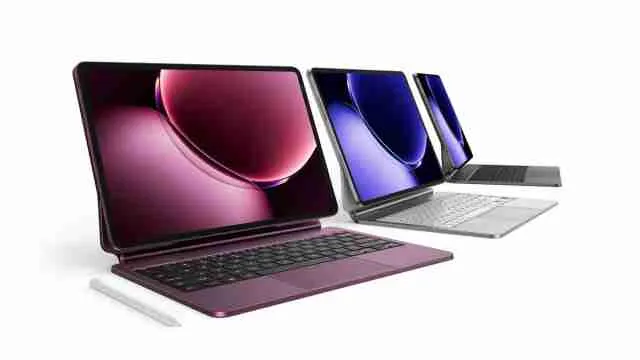
Xiaomi has officially launched the Pad 9 Pro in China, bringing a 12.5-inch 3.2K LCD display, Snapdragon 8 Gen 5 chipset and up to 16GB RAM. The tablet packs an 11,000mAh battery with 67W charging and also supports 22.5W reverse charging. It runs HyperOS 4 and gets up to 1,000 nits brightness. For Indian buyers, however, the key question remains whether Xiaomi will bring this premium tablet to the country, where the Pad 8 is already available.
Xiaomi Pad 9 Pro Price In India
The Xiaomi Pad 9 Pro starts at CNY 3,799 (around Rs 54,000) in China for the 8GB RAM and 128GB storage model.
Other variants include:
- 8GB + 256GB: CNY 4,099
- 12GB + 256GB: CNY 4,599
- 16GB + 256GB: CNY 4,999
- 12GB + 256GB Soft-Light Edition: CNY 4,799
An India price has not been announced yet. If launched here, the Chinese pricing suggests that the Pad 9 Pro could be positioned well above the Xiaomi Pad 8, which currently starts at Rs 38,999 in India.
Xiaomi Pad 9 Pro India Launch: What We Know
The tablet was launched in China on September 14, 2026. Xiaomi has not confirmed an India launch date or global availability so far. This is important for Indian buyers because the company's current India portfolio already includes the Pad 8, but there is no official listing for the Pad 9 Pro on Xiaomi India's store yet.
The Indian market could therefore be the next key step, but buyers should not treat an India launch as confirmed until Xiaomi makes an announcement.
12.5-Inch 144Hz Display And Faster Memory
The Pad 9 Pro gets a 12.5-inch LCD panel with 3.2K resolution, a 144Hz adaptive refresh rate and up to 1,000 nits peak brightness. The larger screen should give it an advantage for multitasking, gaming and laptop-style work.
One less obvious upgrade is the memory technology. The 12GB and 16GB models use LPDDR5T RAM running at 9,600Mbps, while the 8GB version uses LPDDR5X RAM at 8,533Mbps. Storage also varies by model, with UFS 3.1 on the 128GB version and faster UFS 4.1 on higher configurations.
Snapdragon 8 Gen 5, 11,000mAh Battery And More
The tablet is powered by the Snapdragon 8 Gen 5 and runs HyperOS 4. A pre-launch Geekbench listing had already revealed the chipset, 12GB RAM and Android 17 before Xiaomi officially introduced the device.
The battery setup is equally notable:
- 11,000mAh battery
- 67W wired charging
- 22.5W reverse charging
- Up to 14.5 hours of short-video playback, according to Xiaomi
- Up to 20 hours of online meetings, according to Xiaomi
For India, the biggest takeaway is that Xiaomi would be entering the premium tablet space with hardware that sits significantly above the company's current Pad 8 offering. However, the India launch, price and availability are still officially unknown.
Read More: Samsung Galaxy S27 Ultra: 60W Charging, Bigger Battery and Major Camera Upgrade Revealed Ahead of Upcoming Smartphone Launch
FAQs
Question 1: When is the Xiaomi Pad 9 Pro expected to be officially launched?
The Xiaomi Pad 9 Pro has already launched in China on September 14, 2026. However, Xiaomi has not confirmed its India or global launch date yet.
Question 2: How will the Snapdragon 8 Gen 5 improve performance?
The Snapdragon 8 Gen 5 brings newer CPU, GPU and AI capabilities, targeting faster multitasking, gaming and demanding apps. It should also offer better performance efficiency than the previous generation.
Question 3: What are the practical benefits of a 144Hz display?
A 144Hz screen makes scrolling, animations and compatible games look noticeably smoother than standard 60Hz panels. It can also make stylus input and everyday navigation feel more responsive.
Question 4: Will the 11,000mAh battery support fast charging, and how long will it last?
Yes, the Xiaomi Pad 9 Pro supports 67W wired charging, along with 22.5W reverse charging. Xiaomi claims up to 14.5 hours of short-video playback and up to 20 hours of online meetings.
Question 5: How do these leaked specs position the Xiaomi Pad 9 Pro against other premium tablets?
The combination of Snapdragon 8 Gen 5, 144Hz 3.2K display and 11,000mAh battery gives it a strong hardware advantage in the Android tablet segment. Its final position against Samsung and Apple will depend heavily on India pricing and software support.