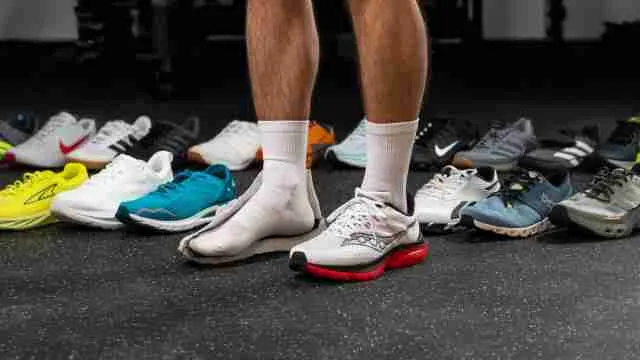
Soft running shoes feel safe because they protect the foot from road impact, but that same softness can become a problem under a heavy bar. During squats, clean pulls or clean lifts from the floor, the body needs a firm base before the hips, knees and back can move together. A thick cushion does not stay still. It compresses under the heel, tilts slightly when weight shifts, and can make the foot search for balance instead of pushing straight into the ground. That small wobble may not matter during light gym work, but heavy lifts punish small leaks in stability. The bar path can drift, the knees may cave, and the ankle has to correct the shoe instead of supporting the lift. For lifting, softness is comfort; firmness is control.
To explore more, visit our Footwear category
Why The Shoe Midsole Matters More Than The Outer Grip During Heavy Lifts?
Many people check the outsole grip first, but the real issue in heavy squats and clean ground lifts often sits inside the shoe. A running shoe may have a rubber bottom that looks grippy, yet the thick foam midsole can still sink and twist under load. When the foot presses down with a loaded bar, that soft layer becomes a moving surface between the lifter and the floor. This can make the heel feel lower one second and higher the next, especially during the drive phase. In clean lifts, that delay can affect timing because the body needs quick force transfer from the ground. A firm sole does not just stop slipping; it helps the lifter feel where pressure is going before the bar speed changes.
Why A Soft Running Shoe Can Hide Bad Balance Until The Bar Gets Heavy?
Soft running shoes do not always feel unstable at first. During warm-ups, they may feel comfortable because the cushion absorbs pressure nicely. The problem starts when the weight becomes serious. The foam begins to sink unevenly, and the lifter may not notice that the foot is already leaning slightly forward, inward or sideways.
This is risky in squats because the body reads the floor through the foot. If the shoe keeps changing shape under load, the knees and hips keep making small corrections. That is when depth, knee tracking and back position can become harder to control.
Clean ground lifts are even less forgiving. The bar has to leave the floor with sharp timing. A soft sole can delay that push, almost like trying to jump from a mattress instead of solid ground. The lift may still happen, but the power does not feel clean or direct.
Where Soft-Cushion Running Shoes Actually Make Sense?
Soft-cushion shoes are not bad shoes. They are just made for a different job. They work better when the foot is taking repeated impact, like road running, treadmill running, long walks, easy cardio or daily standing.
The soft foam helps when the body is moving forward again and again. It reduces the sharp feeling under the heel, makes landing smoother and keeps the foot comfortable when steps keep repeating for a long time.
That is why the same shoe can feel perfect for a 5 km run but wrong under a heavy squat. Running needs impact comfort. Heavy lifting needs a steady base. The problem starts only when one shoe is expected to do both jobs.
What Kind Of Shoes Work Better For Heavy Squats And Clean Ground Lifts?
Heavy squats need shoes that stay quiet under pressure. Not soft, not springy, not the kind that bends when the bar gets heavy. The foot should feel locked on the floor, especially around the heel and midfoot.
For squats, a proper lifting shoe can help because the base is hard and the heel is slightly raised. That small heel lift is useful when the ankle feels tight or the chest keeps falling forward at the bottom of the squat.
For clean ground lifts, the shoe should feel closer to the floor. The first pull needs direct force, not foam sinking under the foot. If the heel wobbles, the sole twists, or the toes keep gripping inside the shoe, it is not the right pair for heavy lifting.
The Quick Shoe Check Before Loading A Heavy Bar
Sometimes the problem is not the squat. It is the shoe quietly moving under the foot.
Before lifting heavy, wear the same shoes and do one slow bodyweight squat. Notice the heel first. If it sinks, rocks or feels like it is sitting on a pillow, that same movement will only become bigger once the bar gets heavy.
Also check what the toes are doing. If they start gripping inside the shoe to hold balance, the base is not steady enough. For clean ground lifts, the first push from the floor should feel direct. If there is a soft delay before the body moves, the shoe is stealing some of that force.
Conclusion
A soft running shoe is not useless; it is just in the wrong place when the bar gets heavy. It can make running or walking easier, but during squats and clean pulls, the foot needs a base that does not sink or wobble. For heavy lifts, choose shoes that keep the heel settled and the floor feeling close.
Disclaimer: At Jagran Reviews, we prioritize providing up-to-date information on the latest trending commodities and goods. Links in this article are affiliate links. Please note that our product recommendations are based on independent research and analysis however, Jagran Reviews shall not be held liable for any claims, damages, or disputes arising under applicable laws, including the Consumer Protection Act, 2019. Any issues regarding product quality, delivery, or warranties must be directed to the respective manufacturer or seller. Furthermore, the products featured in this article are organized for reader convenience and are listed in no particular order of priority or ranking.