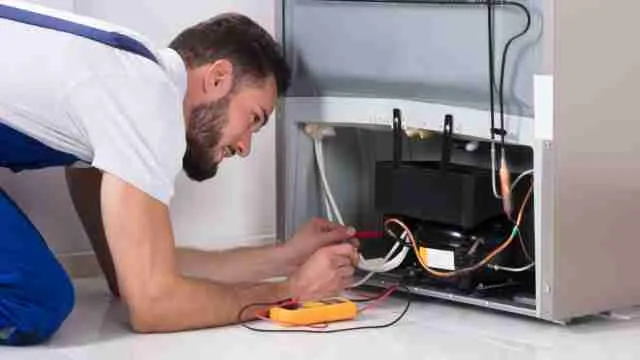
Most of us never pay attention to the sounds coming from the refrigerator because we hear them every day. But if the compressor suddenly becomes louder or starts making a buzzing, clicking, knocking, or rattling sound, it is worth noticing. The compressor is the part that keeps your refrigerator cool, so when it starts having problems, unusual noises are often one of the first signs. Sometimes it is just a small issue that can be fixed, but in many cases, it means the compressor is under stress and getting closer to failing. Ignoring these sounds can leave you with a refrigerator that suddenly stops cooling, spoiled food, and an expensive repair bill. Knowing what these noises mean can help you act before the problem gets worse.
To explore more, visit our refrigerator category.
Identifying the Sounds: Is It Just Old Age or Something Worse?
A refrigerator compressor naturally becomes a little noisier as it gets older, but a new or unusual sound should never be ignored. The biggest warning sign is not the volume it is the change. If your refrigerator suddenly starts making sounds you have never heard before, it is worth checking.
Here are a few common sounds and what they may mean:
- Buzzing: The compressor is working harder than usual or overheating.
- Clicking: It is struggling to start or shutting off too quickly.
- Knocking: Internal parts may be wearing out.
- Rattling: Could be a loose panel, pipe, or vibration from the compressor itself.
- Loud humming: A sign the compressor is under extra stress.
If your refrigerator is over 8 to 10 years old, some extra noise is expected. But if the sounds keep getting louder, become frequent, or are followed by poor cooling, it is more than just old age. Getting it checked early can prevent a complete compressor failure.
DIY Diagnostics: What You Can Check Before Calling a Pro
Before assuming the compressor has failed, there are a few simple things you can check yourself.
- Feel the sides of the refrigerator. If they feel unusually hot, the compressor may be working harder than normal.
- Look behind the fridge. Make sure there is enough space between the refrigerator and the wall. Poor airflow can make the compressor overheat.
- Check if the cooling is consistent. If food is staying cold and the freezer is freezing properly, the compressor may still be working despite the noise.
- Clean the condenser coils. Dust and dirt force the cooling system to work longer, which can make the compressor sound louder.
- Watch how often it runs. If the compressor rarely switches off or keeps turning on and off every few minutes, it needs attention.
If the strange noise continues even after these checks, or the refrigerator starts losing its cooling, it is time to call a technician. Catching the problem early is usually cheaper than waiting for the compressor to stop completely.
Preventative Measures: Extending the Life of Your Next Refrigerator
A refrigerator lasts longer when it does not have to work harder than necessary. A few simple habits can reduce the load on the compressor and help it stay in good shape for years.
- Leave some space around the refrigerator. Good airflow helps release heat, so the compressor does not overheat.
- Avoid keeping the door open for too long. Every time warm air enters, the compressor has to run longer to cool the inside again.
- Do not overload the shelves. Too much food can block airflow, making it harder to maintain an even temperature.
- Clean the condenser coils every few months. Dust on the coils traps heat and makes the cooling system work harder.
- Check the door seal once in a while. If the rubber gasket is loose or cracked, cold air escapes and the compressor keeps running to make up for it.
- Set the right temperature. Making the refrigerator colder than needed only puts extra pressure on the compressor without much benefit.
One small habit that many people overlook is listening to the refrigerator every now and then. When you know how it normally sounds, it becomes much easier to notice if something changes. Catching a small problem early is often the difference between a quick repair and replacing the entire compressor.
Refrigerator Compressor Warranty: What Top Brands Usually Offer
A longer compressor warranty can be a good sign that the manufacturer has confidence in its cooling system. However, the exact coverage depends on the model, so it is always worth checking the warranty details before buying.
- LG: Most refrigerators come with up to 10 years of compressor warranty on selected models.
- Samsung: Many models offer up to 20 years of warranty on the Digital Inverter Compressor, while others may have shorter coverage.
- Whirlpool: Selected refrigerators include up to 10 years of compressor warranty.
- Haier: Many models are backed by up to 10 years of warranty on the compressor.
- Godrej: Offers up to 10 years of compressor warranty on several refrigerator models.
- Panasonic: Selected refrigerators include up to 10 years of compressor warranty.
- Bosch: Many premium models are covered with up to 10 years of compressor warranty.
Before making a warranty claim, remember that the product warranty and compressor warranty are not the same. In many cases, the compressor part is covered for several years, but labour charges, gas refilling, or service visits may not be included after the standard warranty period ends. Always read the warranty terms carefully to know exactly what is covered.
Which Type of Refrigerator Compressor Is Right for You?
Not every refrigerator uses the same type of compressor. The right choice depends on how you use your refrigerator, your budget, and how important quiet operation is to you.
- Conventional Compressor: A good choice if you want an affordable refrigerator and do not mind a little extra noise. It switches on and off as needed and is commonly found in budget models.
- Inverter Compressor: Best for most households. Instead of constantly turning on and off, it adjusts its speed based on the cooling needed. This makes it quieter, more energy-efficient, and helps reduce wear over time.
- Digital Inverter Compressor: Commonly found in many Samsung refrigerators. It works on the same principle as a regular inverter compressor but uses smart controls to adjust cooling more precisely, which can improve energy savings and reduce noise.
- Smart Inverter Compressor: Used in several LG models, this compressor changes its speed according to the cooling demand. It is designed to run smoothly, produce less noise, and consume less electricity during daily use.
- Dual Inverter Compressor: Mostly seen in premium refrigerators. It offers more precise cooling control, quieter operation, and better temperature stability, making it a good option for families who store a large amount of food.
Disclaimer: At Jagran Reviews, we prioritize providing up-to-date information on the latest trending commodities and goods. Links in this article are affiliate links. Please note that our product recommendations are based on independent research and analysis however, Jagran Reviews shall not be held liable for any claims, damages, or disputes arising under applicable laws, including the Consumer Protection Act, 2019. Any issues regarding product quality, delivery, or warranties must be directed to the respective manufacturer or seller. Furthermore, the products featured in this article are organized for reader convenience and are listed in no particular order of priority or ranking.