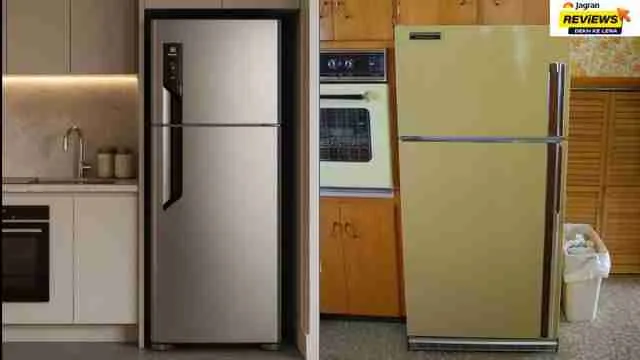
Have you ever bought a new fridge with the exact same capacity as your old one and been surprised to know that the same grocery bags that used to fit in the previous fridge are not fitting in it? This issue usually happens because modern refrigerators have thicker and more energy-efficient insulation walls with bulky air-filtration systems that take up much of your usable shelf space. So if you don't want to struggle with this issue, here is how you can measure your actual usable space and arrange your items to reclaim that lost storage in new models.
The Rated Capacity Number Is Not Real
This was the first thing that annoyed me once I understood more about this. The liter number on the box is measured in a lab usually without shelves, drawers or door bins installed.
- So the capacity number is the empty shell volume and not the usable space.
- Two fridges can share the same rated liters but can differ a lot in how much you can actually stuff inside.
- My old fridge was an older, simpler design so there were fewer plastic parts that used to take up the space.
I genuinely felt a bit cheated when I learned this as it's a dishonest spec. So make sure you understand the internal layout before making your final decision.
Newer Fridges Have Thicker Insulation Walls
This is one is a fact that very few people know about: modern fridges come with thicker insulation walls that offer more energy efficiency. As modern refrigerators are built to meet stricter energy ratings, the desired result can only be achieved by using the thicker insulation foam inside the walls which helps in regulating the power consumption.
- More insulation means better energy saving and lower electricity bills which indirectly means less pressure on the compressor.
- But the thicker walls literally take up most of the internal space.
- So the outer size of the fridge looks the same while the inner space can shrink.
But to be honest, this reason cannot be a reliable reason to get disappointed because my electricity bill actually did drop a little.
Bonus tip: If your floor space is not an issue for you, try to go for a size up from what you'd normally buy so that you don't have to go through the space shrinkage issue.
To explore more, visit our refrigerator category.
Modern Refrigerators Have Multiple Compartments And Drawers
My old fridge had one big vegetable drawer and a couple of plain shelves, so obviously it felt more spacious, but the new one has a dedicated dairy compartment, a separate crisper with humidity control, a deli drawer, egg trays, bottle holders and door shelves with little dividers, which looks good for organizing the stuff but takes up much of your space.
- In real use, they break up the open space into smaller ones.
- So now you can't just fit the big tiffin or a large mixing bowl anywhere anymore.
- I actually like the organization on some days but get frustrated when I want to fit the big pot of leftovers inside.
Bonus tip: Some compartments and dividers are removable. Make sure you check it manually, as with this, you can make a good amount of space.
French Door And Multi-Door Designs Lose Space To Framing
I switched from a single door fridge to a French door model and this is where I lost the most usable space.
- Because every extra door in new models needs its own dedicated space, gasket and seal.
- Multi-door fridges have internal partitions that single-door fridges just don't need, so obviously they take much of the internal space.
- The middle section where two doors meet often has a little usable width.
So basically these refrigerators look premium and feel modern, but in terms of storage capacity, my old single door fridge wins.
Bonus tip: If storage space is more important to you than aesthetics, then go for a simple double door fridge that will offer more usable volume than a fancy multi door one.
Check out more recommendations at Jagran Reviews
Frost-Free Technology Takes Up Hidden Space
My old fridge needed manual defrosting every couple of weeks which was annoying, so I definitely went for the frost-free model but had no idea that this technology takes up the hidden space.
- Frost-free fridges have a fan, evaporator coil, and air circulation ducts that are built into the back or side walls.
- This entire system sits inside the cabinet which is not visible to you but steals the depth and width.
- Older manual-defrost fridges had a simple cooling plate, so it took no extra space.
I don't regret the switch since I hated defrosting every week but I do wish someone had told me about the space thing.
Bonus tip: If you genuinely don't mind occasional manual defrosting and want maximum space, then the direct-cool fridges which are non-frost-free can give you much farther usable room.
My Honest Takeaway
I would say that, of course, the capacity number of the fridge was kind of technically accurate but it does not feel the same in daily use.
So If I had to buy again, I would
- Ask for net usable capacity and not just gross liters.
- Check shelf depth and door bin sizes by going to the store in person.
- Decide honestly whether I need frost-free and multi-door designs or I am just paying for the features and space that I don't need.
Also Read:
Ultimate Refrigerator Buying Guide: Choosing the Perfect Model for Your Home (July 2026)
Why Stainless Steel Refrigerators Are A Beautiful Lie If You Have Toddlers With Sticky Fingers In The House? (July 2026)
Disclaimer: At Jagran Reviews, we prioritize providing up-to-date information on the latest trending commodities and goods. Links in this article are affiliate links. Please note that our product recommendations are based on independent research and analysis however, Jagran Reviews shall not be held liable for any claims, damages, or disputes arising under applicable laws, including the Consumer Protection Act, 2019. Any issues regarding product quality, delivery, or warranties must be directed to the respective manufacturer or seller. Furthermore, the products featured in this article are organized for reader convenience and are listed in no particular order of priority or ranking.