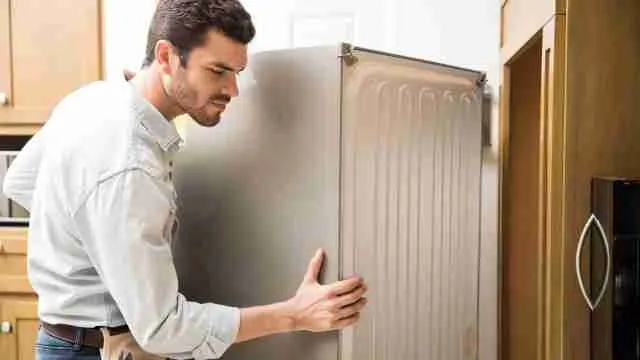
A freezer full of frost not only looks bad but also it consumes a lot of energy, which causes your utility bills to increase without you noticing, and at the same time, it jeopardises the freshness of your food. Here we break down the complicated explanations of science and technology to make a simple and surprisingly easy-to-follow plan for the defrosting of your refrigerator. You will find out what difference it makes if the ice accumulation is only a little, how to safely speed up the melting of the ice without your fridge getting damaged, and the easy practices that ensure frost will never come back. In case you are using a manual unit that can be considered very traditional or a fridge that is quite modern but is giving you trouble, this article is going to be of great help for you to recover your kitchen area and store your food in the best conditions.
Why Your Fridge Needs A Reset: The Cold Truth
Imagine this, you open the freezer to get a bag of peas and instead, you find nothing but a frozen sea of ice that has swallowed them. Manual defrosting nowadays somehow seems like a totally archaic and tedious thing to do, especially when we are living in a world full of "smart" gadgets. Nevertheless, even the new models can get ice buildup if a door is left slightly open or the seal gets worn out.
Just like a warm winter coat, frost-covered cooling coils also struggle to get through the thick layer. Here, the coat, however, keeps the cold out of your fridge. As a result, the motor has to operate at a higher level, thus running up your electric meter and at the same time, shortening the life of your appliance. Besides money, the old ice layer traps odors and food spills and thus creates a stale environment for your food. A defrost is like giving a spa day to your kitchen's hardest worker; the little effort is rewarded with lower bills and fresher meals.
Pre-Game Prep: Setting The Stage
Before you pull the plug, you need a game plan. Defrosting your refrigerator is a "wet" job, and without a little foresight, you’ll end up with a kitchen floor that looks like a shallow pond.
The big move: Ideally, it should be done when your food supply runs low. For the basics, grab a nice cooler and loads of ice packs. Imagine it as a grocery trip camping.
Collect Your Tools: You'll require a heap of old towels, a shallow tray for catching drips, a spray bottle with a vinegar, water solution, and a good measure of patience.
In case of emergency: Disconnect the unit. If melting water mixes with live electricity, the accident will happen for sure. If your fridge is a built, in model, simply switch off the circuit breaker.
Step-By-Step: How To Defrost Your Refrigerator
This is where the magic happens. While it’s tempting to grab a hairdryer or a hammer, the best tool in your kit is actually just time.
The Total Clear-Out
First, remove all the items, then the furniture. Get out the glass shelves, plastic drawers, and door bins.
Note: Before washing, let the glass shelves come to room temperature. If you suddenly heat a freezing cold shelf with hot tap water, the thermal shock might make the glass break right into your hands.
Manage the Melt
If your refrigerator comes with a drainage hose at the bottom, you can pull it out and direct it into a shallow container. Otherwise, make a thick towel "dam" at the bottom of the freezer and along the floor in front of the unit. This is your frontline defense against a soggy kitchen.
The Waiting Game
Defrosting in the safest way will only require you to leave the doors open and go about your business.
- (Method 1) Relaxed: Leave the doors open for 612 hours (overnight is perfect).
- (Method 2) Speed, Run: If time is of the essence, put bowls of hot (not boiling) water on the shelves and shut the door. The steam trapped inside will loosen the ice's hold. Change water every 20 minutes to keep the process steady.
Removing the Ice (Be Gentle!)
As the ice melts, it will become loose and floppy. You can easily detach pieces that already got separated from the walls. A Word of Warning: Under NO circumstances should you take a knife, screwdriver, or a metal scraper to cut the ice. Your freezer walls have very fine refrigerant lines that are filled with gas. With one wrong move, you may break the line, releasing gas and therefore "killing" your fridge. Use a plastic spatula or an ice scraper only.
Scrub and Sanitize
After ice disappearance, you may find some spills that were hidden. Clean everything with a 1:1 solution of white vinegar and water. This natural disinfectant is effective against mold and changes to a scentless state after killing "freezer odors".
The Big Dry
This is the step that makes all the difference. Get a dry towel and make sure to dry each and every inch of the inside. If you don't dry it perfectly, the moisture will flash, freeze instantly once you switch the appliance back on, and the next day you will see a new layer of frost.
Maintenance Hacks: How to Never Do This Again
Rather than merely thinking of refrigerator maintenance as a matter of setting a dial, imagine the task of keeping it frost-free in terms of controlling airflow and moisture. Initiate with the Bill Test": close your freezer door on a bill; if it slides out more easily, your gaskets are leaking warm air, and hence you need to either scrub them with soapy water or replace them. Then, adhere to the "Goldilocks Zone" by setting your freezer at 0F (18 °C) and the fridge at 37F (3 °C); lowering the temperature will only lead to the formation of ice. You should never disregard the 3/4 Rule: maintaining the refrigeration unit at approximately 75% full helps keep it at an optimal temperature due to the thermal mass, yet at the same time, you should not block the internal air vents with large items.
Additionally, always allow leftovers to cool down to room temperature before putting them in the refrigerator; hot food placed inside causes instant condensation which promptly freezes into difficult, to, remove ice crystals. An easy yearly rinse of the drainage port using a warm water turkey baster will make sure any moisture inside the unit will go out instead of gathering on the floor, thereby forming ice.
For More Such Articles, Refer To Jagran Reviews
Disclaimer: At Jagran Reviews, we prioritize providing up-to-date information on the latest trending commodities and goods. Links in this article are affiliate links. Please note that our product recommendations are based on independent research and analysis however, Jagran Reviews shall not be held liable for any claims, damages, or disputes arising under applicable laws, including the Consumer Protection Act, 2019. Any issues regarding product quality, delivery, or warranties must be directed to the respective manufacturer or seller. Furthermore, the products featured in this article are organized for reader convenience and are listed in no particular order of priority or ranking.